
BBC-
Barack Obama was elected on a message of change. Now he is in office, change is expected both in foreign and domestic policy. Here the BBC’s team in Washington tracks developments in the first 100 days of the Obama presidency.
As we approach President Obama’s 100th day, do you have any questions for our correspondents here in Washington about the new administration? If you do, our team of experts will attempt to give you some answers.
James Coomarasamy : It would appear that the White House isn’t prepared to sacrifice its plans to reform the country’s health care system on the altar of bi-partisanship.
According to reports, it’s reached a tentative deal with Senate Democrats that would make it much harder for opposition Republicans to block the reforms being proposed in next year’s budget.
The agreement – which senior Democrats are saying has not yet been finalised – involves the use of a congressional procedure called reconciliation instructions.
It would set a timetable for debating any health care legislation, at the end of which Senate Democrats would only need a simple majority – not the usual 60 votes – to pass the bill.
It’s a technical move, but it could have wide-ranging practical and political effects
Max Deveson : How do you condemn the mass killing of Armenians by Turks in 1915 as a "genocide", without using the actual word "genocide".
Well, if you’re Barack Obama, you refer people to previous statements you have made on the subject.
In 2008, when he was running for president, Mr Obama said: "The Armenian genocide is not an allegation, a personal opinion or a point of view, but rather a widely documented fact supported by an overwhelming body of historical evidence. America deserves a leader who speaks truthfully about the Armenian genocide and responds forcefully to all genocides."
But today, in a statement marking the incident, although Mr Obama described it as "one of the great atrocities of the 20th century", he did not use the word "genocide".
In a nod to his previous assertion, he said: "I have consistently stated my own view of what occurred in 1915, and my view of that history has not changed."
So Mr Obama has not backed down from his position that the massacre qualified as "genocide".
But, as the New Republic’s Michael Crowley points out , "Obama’s promise was to ‘recognise’ the genocide as such, using that word, as a matter of US policy", not merely to hold the view in private.
As such, Mr Crowley concludes, the statement "breaks – or, to be charitable, defers – a very explicit campaign promise".
Max Deveson : "The days of any time, any reason rate hikes have to stop."
That was President Obama’s message to the credit card companies today . It’s a theme he has been pushing since the start of his presidential campaign, but it has taken on more urgency as the economic crisis has deepened.
Mr Obama met the CEOs of 13 major card issuers, and told them they needed to scrap unfair interest rate hikes and be more transparent and accountable.
The banks are worried that a crackdown on credit card companies will hurt them at a time when they are already suffering.
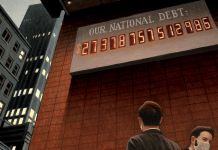
But they are unlikely to win much sympathy from voters. The average American household with a credit card held $10,679 in credit card debt at the end of 2008.
A bill introduced in Congress yesterday
Max Deveson : President Obama marked Earth Day today by announcing a move to allow renewable energy generation off the US coast.
Mr Obama said generating power from wind could satisfy 20% of America’s demand for electricity, and that offshore renewable power from wind, waves and ocean currents could create as many as 250,000 jobs.
The president is attempting to create an inextricable link between economic recovery and his ambitious environmental agenda in the minds of the American public.
The big test of this strategy will be in Congress. If legislators think that supporting Mr Obama’s cap and trade plan to reduce greenhouse gas emissions will make them more popular, then the president will have succeeded.
James Coomarasamy : Before now, the message from the White House had been clear – it had no intention of pressing charges against Bush Adminsitration officials involved in the controversial interrogation of terrorist suspects. This was the time to look forward, the President had said, not backwards.
But – with pressure growing from his own party not to rule out potential prosecutions – Mr Obama has had a change of tone. Asked whether he would give officials the same assurances of immunity he’s given to CIA agents who carried out the now-banned forms of interrogation, the President made a distinction:
"With respect to those who formulated the legal decisions," he said, "that is going to be more of a decision for the Attorney General".
Mr Obama’s remarks come a day after the former US Vice President Dick Cheney publicly defended the interrogation methods and reflect the increasingly complex political situation surrounding the decision by the White House last week to publish the four Justice Department memos outlining the methods.
Kim Ghattas : President Mahmoud Ahmadinejad’s speech at the UN anti-racism conference in Geneva adds another layer to America’s complex attempts to engage Tehran.
Ahmadinejad is walking a fine line ahead of the Iranian elections in June. He needs to appeal to an electorate that may be open to the idea of a detente with "the Great Satan", in a country that (despite the image it has abroad) has the least anti-American population in the region.
But he also needs to keep the clerics on his side by maintaining his tough anti-Western rethoric. He scored high with the UN speech.
The case of journalist Roxana Saberi exemplifies that balancing act. The hard-liners in Iran have demonstrated their unwillingness to engage with Washington, but Ahmadinejad has cleverly intervened to ask that Saberi be allowed a full defence during her appeal. All the while, this is unfolding at the UN.
The US is not easing the pressure of sanctions for now. In fact, rather interestingly, the man in charge of tightening the screws on Tehran during the Bush years, Stuart Levey, is still in his job at the Treasury department
James Coomarasamy : On his first visit to CIA headquarters, President Obama told employees that he understands the difficulty they’ve had over the release of the so-called torture memos.
But he defended his decision to publish them and offered reassurance that there’d be no legal consequences for the officers who’d acted on their advice.
Saying his administration had had no alternative but to release the memos, he went on to praise the agency’s unsung patriotism.
He said he understood it was hard to operate against unscrupulous enemies and that the agents must feel as though they were acting with one hand tied behind their backs. But, he said, it was important for US security that they carried out their work to the highest moral standards:
Even if the president’s words do help answer the concerns of CIA agents, they’re unlikely to silence those who’ve criticised his decision to release the memos.
His critics on the right say his action will make the country less secure, while those on the left want him to pursue charges against those who may have tortured prisoners in America’s name.
Max Deveson : It’s only taken 91 days, but President Obama has finally gathered his full cabinet together for a meeting.
Of course, his cabinet appointments required congressional approval before they could take up their positions, so it is not really surprising that it has taken so long for the cabinet to meet. Moreover, unlike in countries like the UK, where the Cabinet meets every week, the Cabinet in the US meets less frequently – policy is generally decided at the White House, and Cabinet Secretaries are charged with implementing it.
At the meeting, Mr Obama ordered his Cabinet to find cost saving in their departments, in order to cut $100m from the budget.
He acknowledged that $100m was a "drop in the budget", but that the government needed to win back the confidence of the American people by showing that money was not being wasted.
"We’ve got to earn their trust," he said.
ATTENTION READERS
We See The World From All Sides and Want YOU To Be Fully InformedIn fact, intentional disinformation is a disgraceful scourge in media today. So to assuage any possible errant incorrect information posted herein, we strongly encourage you to seek corroboration from other non-VT sources before forming an educated opinion.
About VT - Policies & Disclosures - Comment Policy